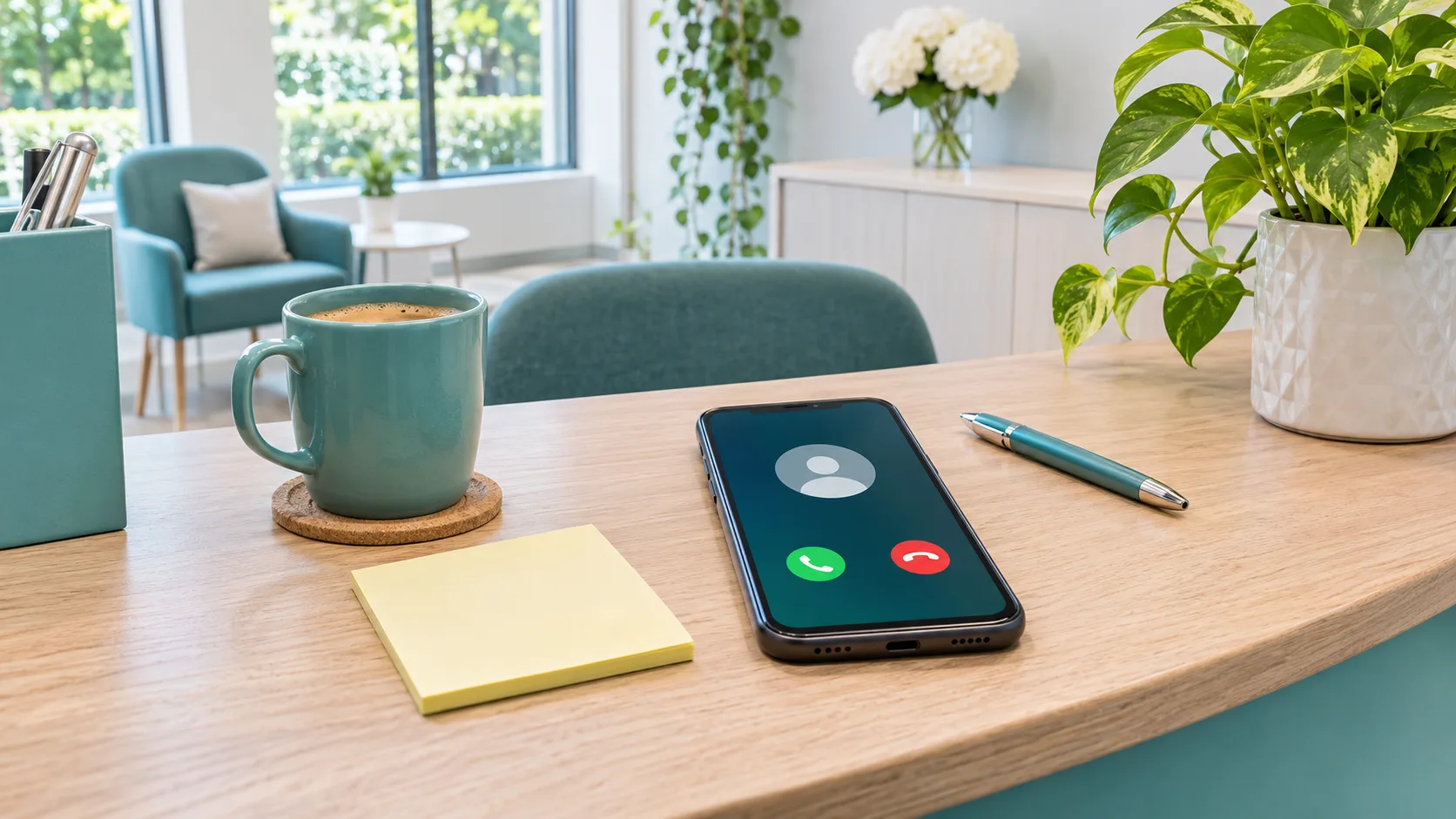
It's 5:40 on a Friday. Your bookkeeper's phone rings, and it's you. Your voice, your way of saying her name, a bit rushed because you're "at the airport". A supplier needs paying before the weekend or the order is lost. You'll explain on Monday. Please keep it between the two of you for now.
She has worked with you for six years. What does she do?
If the honest answer is "she'd probably pay it", this post is for you. Not because your bookkeeper is careless, but because the call is built to make checking feel rude.
This isn't a big-company problem any more
The famous case is Arup, the British engineering firm. According to Hong Kong police, as reported by the Financial Times and CFO Dive, a staff member got a message from someone posing as the company's UK-based finance chief about a "confidential transaction", then joined a video call with a fake finance chief and other AI-generated colleagues. They sent HK$200 million, about $25 million, to five bank accounts. The fraud came to light only when they followed up with head office.
A small business doesn't need a fake video meeting. One phone call or voice note from "the owner" is enough, because in a small team the owner is the approval process.
And the voice is easy to get. In May 2025 the FBI warned that criminals were sending AI-generated voice messages impersonating senior US officials, and said a cloned voice and a legitimate one "can sound nearly identical". If you've ever been in a webinar, an Instagram video, a podcast or even a long voicemail greeting, there's a recording of you somewhere.
Why "listen carefully" doesn't work
Most advice tells people to listen for odd pauses or a flat tone. The FBI says that too, and it's worth knowing. But don't build your protection on it.
In a CommBank survey of small business owners, reported in January 2026, participants correctly identified only 42% of deepfake attempts, even though many felt confident they'd spot one. That's worse than a coin toss.
So the question isn't "will my team hear the fake?" It's "will my team feel allowed to hang up on me?"
The real weak point is politeness
Look at what the call asks for, not how it sounds. These scams almost always lean on the same three things:
- Authority. It's the boss, or a big client, or the bank.
- Hurry. Before 6pm, before the weekend, before the deal falls through.
- Secrecy. "Don't mention it to anyone yet." Arup's started as a "confidential transaction".
Each one is designed to make the normal check feel like disloyalty. Your employee isn't afraid of the scammer. They're afraid of annoying you.
That's why the fix is something only the owner can give.
The owner's promise
Write this down, sign it, and send it to everyone who can move money, pay invoices or change supplier details. Then say it out loud at the next team meeting.
From [your name], to everyone at [business name]:
If I ever call, text or send a voice note asking you to make an urgent payment, change bank details, buy gift cards, or keep something from the rest of the team, hang up and call me back on the number you already have for me.
Do this even if it sounds exactly like me. Do this even if I sound annoyed.
You will never be in trouble for checking. If it's really me, I'll thank you.
Any payment over [amount] needs a second person to say yes, whoever asks for it.
Signed, [name], [date]
Five lines. It costs nothing, and it removes the one thing the scam depends on: an employee who feels they can't say "let me call you back".
Three sentences your team can say on the spot
People freeze when they don't know what to say. Give them the words:
- "I'll call you straight back on your usual number." Then hang up and do it. Not a number the caller gives.
- "I need [second person] to approve this first. That's the rule." It puts the rule in charge, not them.
- "What's our word?" Agree a code word in advance. The FBI suggests families set up a "secret word or phrase" to check it's really them; a small team can do the same. Keep it out of email and chat, and change it if anyone leaves.
A real boss will grumble for ten seconds. A scammer will push, get angry, or vanish.
Test it in ten minutes
A rule nobody has practised is a rule nobody remembers. Once, without warning:
- Ask a colleague or friend to ring your office "on your behalf" (or send a text from a new number) asking for a small, harmless favour that breaks the rule: "pay this supplier today, I'll explain later."
- See what happens. Did they call you back on your usual number? Did they ask for the second person?
- Afterwards, thank whoever checked, in front of the team. That moment does more than the policy.
Don't use AI to clone your own voice for the test, and don't trick anyone into actually paying. The point is the habit, not the fright.
Make it a little harder to copy you
You can't remove your voice from the internet, and you shouldn't stop making videos. But you can make the scam's job harder:
- Don't publish who pays the bills. "Our office manager handles all supplier payments" on your website or LinkedIn tells a scammer exactly whom to call.
- Keep payment changes out of voice and chat. New bank details only go through one known route, checked by a call back. The same rule we gave for fake invoices that look perfect.
- Turn on two-step login for email and banking, and never read a code out to anyone who calls, even "the bank" or "the boss". The FBI is clear on this too.
If it's already happened
Call your bank straight away and ask them to try to stop or recall the payment; minutes matter. Then report it to the police or your national fraud reporting service (in the US, the FBI's IC3). Write down the time, the number and what was said while you still remember. And tell the person who paid that it wasn't their fault. You'll want them to speak up fast next time.
If you'd like a hand
Most small teams have never written any of this down, and it takes an hour to get right. In our AI Check-up ($149, credited if you go further) we look at how your team uses AI and where it could catch you out, and you leave with a one-page plan. If you'd like the whole team trained on using AI safely at work, that's our Team Workshop ($750 online). We train and write the paperwork; we don't sell security software or promise you'll never be targeted.
Not sure where AI would save your business time?
A 60-minute call and a one-page plan naming the 3 jobs in your business worth automating first. Taken off the price of any build booked within 30 days.
Related Articles
Your Client Just Asked Which AI You Use. Here's the One-Page Answer.
Bigger clients now ask their suppliers which AI tools they use, what data goes in and who approved it. The six questions that keep coming up, what a weak answer and a good answer sound like, and a one-page AI use statement a small firm can fill in this week.
Does Your Website Chatbot Have to Say It's AI? Yes. Here's the Wording.
Since 2 August 2026, EU rules say people must be told when they're talking to an AI. What that means for a small business with a chat widget or an AI phone line, who is responsible, and short wording you can paste in today.

A One-Page AI Policy for a Small Team (Copy It, Then Change It)
Your staff are probably already using ChatGPT, Gemini or Claude for work, often on personal accounts. A short, plain AI policy a small business can copy today, what each line is for, and what the EU AI Act's 'AI literacy' rule actually asks of a small firm.