

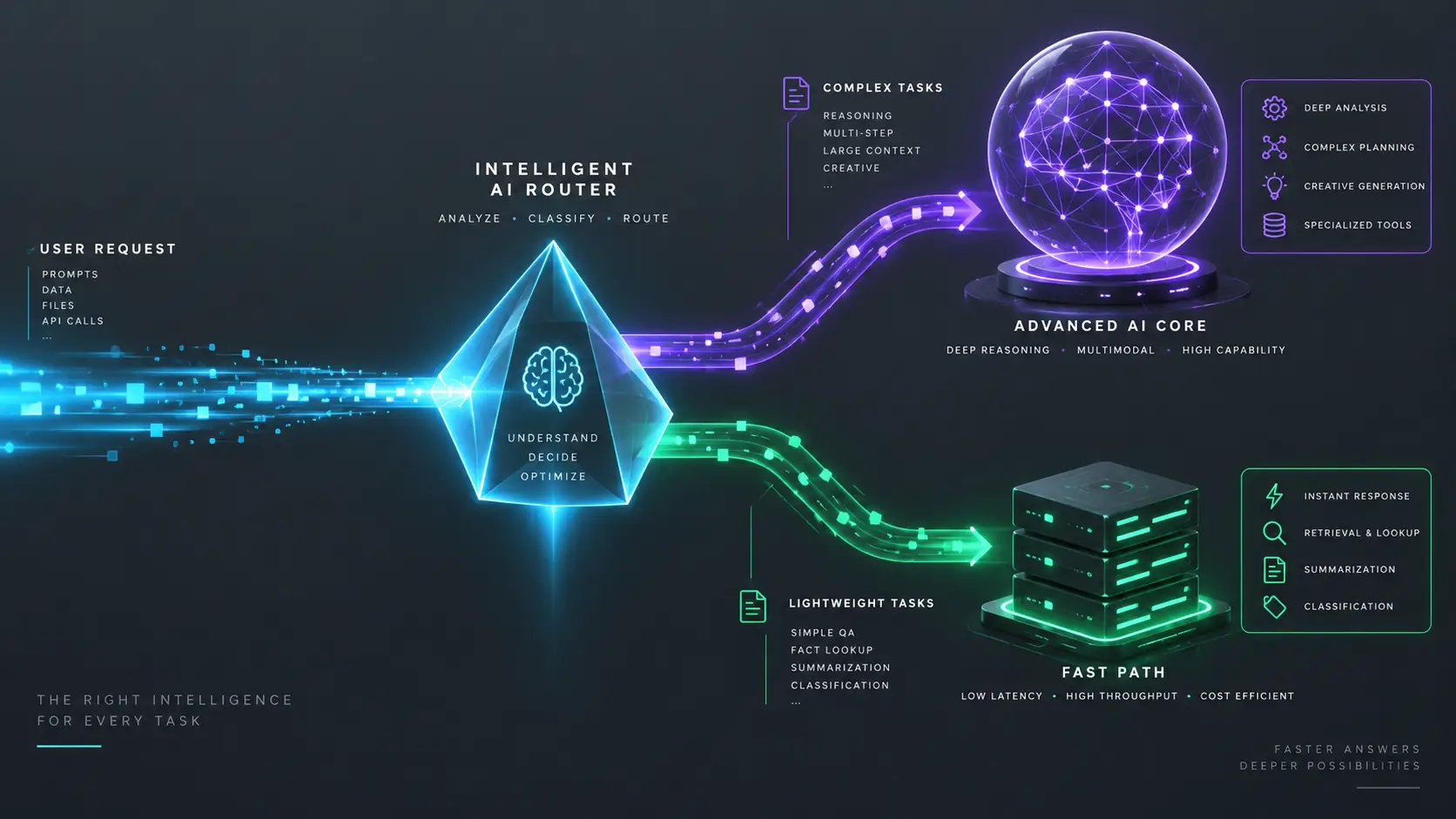
When engineering teams first prototype an autonomous agent, they follow an intuitive setup: take the most capable frontier model available, equip it with 20 tool definitions, write a comprehensive system prompt, and give it full control over the execution loop.
In demos, it looks brilliant. In production, it hits a wall:
- The latency trap: Asking a massive reasoning model to decide whether to fetch a user profile or call a database query introduces 2–4 seconds of time-to-first-token for every minor turn.
- The cost tax: Processing 40,000 tokens of system instructions and tool definitions across an 8-step trajectory burns frontier model pricing on decisions that could be made with simple heuristics.
- The accuracy paradox: Research and empirical testing consistently show that giving a single LLM too many tools degrades tool-selection precision. The model's attention is diffused across dozens of parameters.
To build reliable agentic systems, leading teams are abandoning the "one giant brain" pattern. Instead, they are implementing tiered execution via small-model routers.
What Is a Speculative Router?
A router is a specialized, lightweight execution gate that sits between user intent and your tool suite. Rather than sending raw prompts directly to your primary reasoning model, incoming tasks hit an ultra-fast, small model (or fine-tuned SLM) whose sole responsibility is intent classification, scope pruning, and tool subsetting.
┌────────────────────────────────────────────────────────┐
│                   Incoming User Task                   │
└───────────────────────────┬────────────────────────────┘
                            │
                            ▼
┌────────────────────────────────────────────────────────┐
│               STAGE 1: FAST ROUTER (SLM)               │
│   • Classifies Intent (Read vs Write vs Reasoning)     │
│   • Prunes 30 Tools down to Top-3 Relevant Tools       │
│   • Validates Auth & Schema Format (< 250ms, ~$0.0001) │
└─────────────┬────────────────────────────┬─────────────┘
              │ Simple Task                │ Complex Reasoning
              ▼                            ▼
┌──────────────────────────┐  ┌──────────────────────────┐
│   Direct Deterministic   │  │   STAGE 2: FRONTIER LLM  │
│      Execution (Code)    │  │  (Executes with Lean,    │
│  (No heavy model needed) │  │   Sanitized Context)     │
└──────────────────────────┘  └──────────────────────────┘
The router does not attempt to solve the entire problem. It performs three critical triage functions:
- Tool-space pruning: If your platform has 30 tools, the router inspects the request and filters the tool definitions down to the 2 or 3 relevant ones. When the primary model is invoked, its prompt is 75% smaller, and its tool-selection accuracy jumps dramatically.
- Deterministic short-circuiting: Up to 40% of inbound tasks (status checks, static lookups, simple filters) don't need generative reasoning. The router sends them straight to backend database queries or code functions, bypassing the LLM entirely.
- Model tiering: Simple extractions and classification steps are dispatched to sub-cent, sub-second models. The expensive frontier model is reserved for multi-step reasoning, ambiguous synthesis, or code generation.
The Code Pattern: A Lightweight Router Interface
Implementing a router does not require complex frameworks. Here is a clean architectural pattern:
from pydantic import BaseModel
from typing import Literal, List

class RouteDecision(BaseModel):
    task_category: Literal["data_lookup", "complex_reasoning", "transactional_mutation"]
    requires_frontier_model: bool
    active_tools: List[str]  # Only the tools needed for this specific step
    rationale: str

def route_inbound_task(task_input: str) -> RouteDecision:
    """
    Invokes an ultra-fast, lightweight model with strict JSON grammar
    to decide execution tier before touching heavy models.
    """
    router_prompt = f"""
    Analyze the user prompt. Classify intent and select minimum viable tools.
    Available Tools: [db_query, send_email, rebalance_portfolio, generate_report, fetch_logs]
    User Prompt: {task_input}
    """

    # Executed on a fast, sub-second model (e.g., lightweight flash tier or local SLM)
    return fast_llm_structured_call(
        prompt=router_prompt,
        response_model=RouteDecision
    )
By decoupling routing from execution, the primary reasoning model never sees tool schemas or data structures that are irrelevant to the current turn.
The Architectural Benefits
When you switch from monolithic agents to a routed, tiered architecture, the operational improvements are immediate:
- 60%–75% lower end-to-end latency: Simple queries return in hundreds of milliseconds instead of 5 seconds because they avoid heavy frontier model overhead.
- Significant API cost reduction: Passing 3 focused tools instead of 30 cuts input token payloads on every turn of an agent trajectory.
- Higher task completion rates: Reducing tool clutter eliminates hallucinated parameters and prevents agents from selecting incorrect functions.
Summary
The mark of a mature AI architecture isn't how large a model you can throw at a problem. It's how little model you need to solve it reliably.
Stop giving a single LLM a blank canvas and 30 tools. Build a clean, deterministic routing layer, prune your context before invocation, and reserve frontier reasoning for the problems that actually demand it.
Need a scalable stack for your business?
Cynked designs cloud-first, modular architectures that grow with you.
Related Articles

When to Build Internal Tools (and When Not To)
A practical guide to deciding when to build internal tools and when to buy. Includes ROI signals, scoping advice, and common mistakes to avoid.

Why Your Business Needs a Scalable Tech Stack
Learn why your business needs a scalable tech stack and how to build one that grows with you. Avoid costly rebuilds by planning for scale from day one.
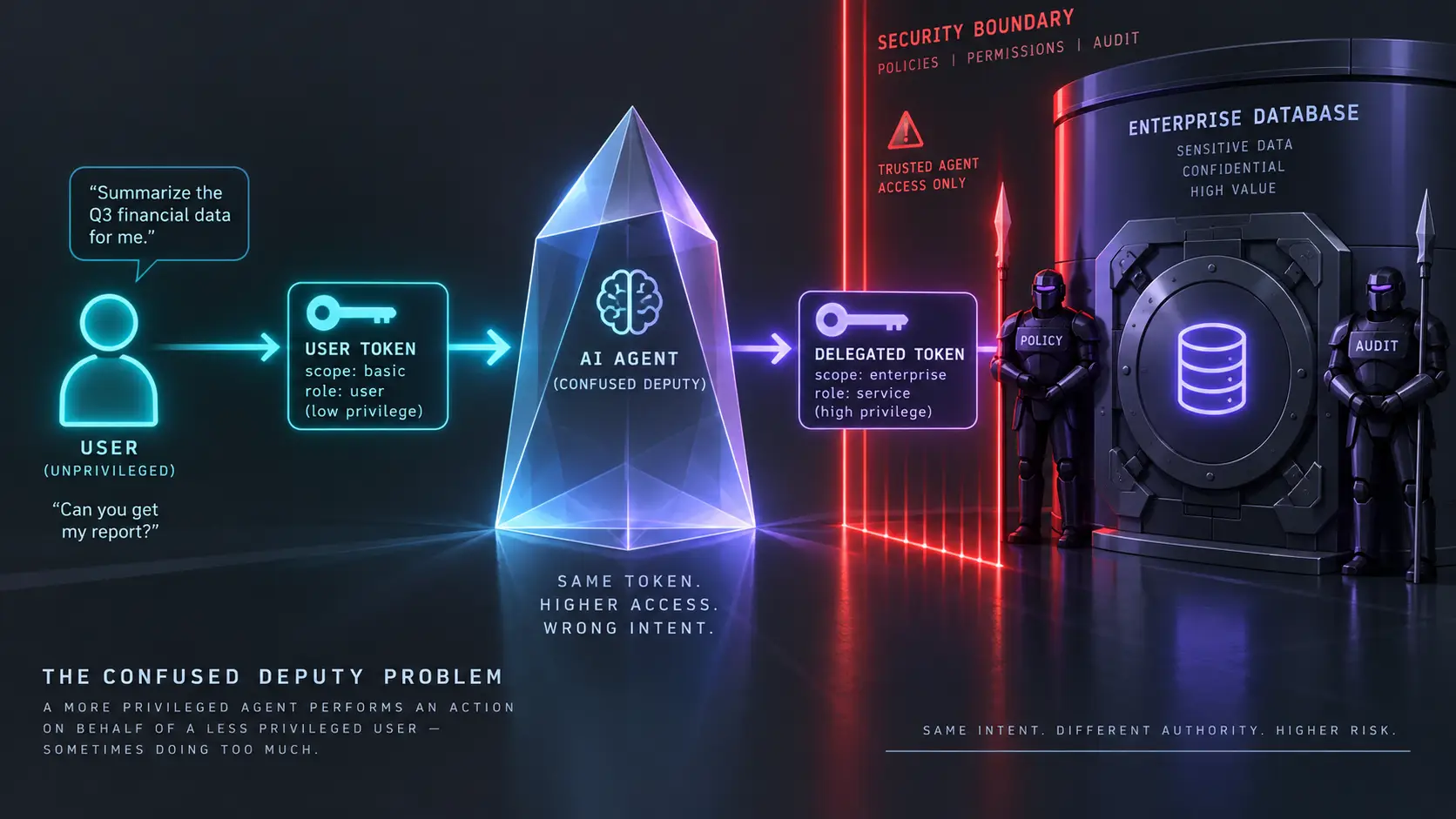
The Confused Deputy Problem in AI Agents: Why Ambient Authority Destroys Enterprise Security
An AI agent running on a master service key can be talked into fetching data its user is forbidden to see. Delegated, ephemeral, data-layer-bound authorization closes the gap that prompt guardrails can't.