
A New Chapter in US AI Regulation
On March 12, 2026, Washington State passed landmark AI disclosure and chatbot safety bills that will reshape how businesses deploy artificial intelligence. These are not aspirational guidelines or voluntary frameworks — they carry legal teeth and concrete compliance requirements.
For any company using AI-powered products, automated decision-making, or customer-facing chatbots, the clock is now ticking. Here is what you need to know and what you should be doing about it.
The Two Bills at a Glance
Bill 1: The AI Disclosure and Transparency Act
This legislation mandates that businesses disclose when AI is being used in decisions that materially affect consumers. That includes hiring, lending, insurance underwriting, healthcare recommendations, and more.
Key requirements:
- Clear disclosure whenever AI is a significant factor in a decision affecting a consumer
- Plain-language explanations of how the AI system reached its output
- Opt-out mechanisms allowing consumers to request human review of AI-driven decisions
- Record-keeping obligations requiring businesses to maintain logs of AI-assisted decisions for a minimum retention period
Bill 2: The Chatbot Safety and Identification Act
This bill targets conversational AI specifically — the chatbots and virtual assistants that millions of consumers interact with daily.
Key requirements:
- Bot identification so users always know they are communicating with an AI, not a human
- Safety guardrails preventing chatbots from providing advice in regulated domains (medical, legal, financial) without appropriate disclaimers
- Minor protection provisions requiring additional safeguards when chatbots detect or are likely interacting with users under 18
- Escalation pathways ensuring users can reach a human agent when requested
Why This Matters Beyond Washington
Washington has a track record of leading on technology regulation. The state's data breach notification law, passed years before most states had one, became a template that dozens of legislatures adopted. There are strong signals this will happen again.
At least seven other states — including California, New York, Illinois, Colorado, Connecticut, Texas, and Virginia — have AI regulation bills in various stages of committee review. Washington's passage gives those efforts momentum and a proven legislative framework to build on.
The practical takeaway: even if your business does not operate in Washington today, preparing for these requirements positions you ahead of what is coming everywhere else.
Practical Compliance Steps to Take Now
1. Audit Your AI Touchpoints
Map every place AI interacts with customers or influences decisions in your organization. This includes obvious applications like chatbots and recommendation engines, but also less visible ones like AI-powered resume screening, fraud detection, or dynamic pricing.
2. Implement Disclosure Mechanisms
Build disclosure into your user interfaces before you are forced to retrofit it. This means:
- Adding clear labels where AI is generating content or making recommendations
- Creating explanation pages that describe your AI systems in accessible language
- Designing opt-out flows for consumers who want human review
3. Review Your Chatbot Architecture
If you operate customer-facing chatbots, evaluate them against the new requirements:
- Does the chatbot clearly identify itself as AI at the start of every interaction?
- Are there guardrails preventing it from giving advice in regulated areas without disclaimers?
- Can users seamlessly escalate to a human?
- Do you have age-appropriate safeguards in place?
4. Establish Record-Keeping Practices
Start logging AI-driven decisions now. This includes the inputs, the model or system used, the output, and any human oversight applied. These records will be essential for demonstrating compliance and responding to consumer inquiries.
5. Train Your Teams
Compliance is not just a technology problem. Customer service, marketing, product, and legal teams all need to understand the new requirements and how they affect day-to-day operations.
The Competitive Advantage of Early Compliance
Regulation often feels like a burden, but companies that move early tend to benefit. Transparent AI practices build consumer trust. Structured oversight catches errors before they become liabilities. And the operational discipline required for compliance often improves AI system quality overall.
Businesses that treat this as a checkbox exercise will struggle. Those that use it as an opportunity to build genuinely trustworthy AI systems will differentiate themselves in a market where consumer skepticism about AI is growing.
What Comes Next
Expect federal AI legislation to draw heavily from state-level experiments like Washington's. The patchwork of state laws will eventually create enough compliance complexity that businesses themselves begin advocating for a unified federal standard — much like what happened with data privacy.
In the meantime, the smartest strategy is to build for the strictest standard. If your AI systems comply with Washington's requirements, they will likely comply with whatever comes next.
How Cynked Can Help
Navigating AI regulation while keeping your AI initiatives on track requires both legal awareness and technical depth. At Cynked, we help businesses implement AI solutions that are powerful, compliant, and built for a regulatory landscape that is evolving fast.
If you are unsure where your AI systems stand relative to these new requirements, reach out for a consultation. We will help you audit your current AI footprint, identify compliance gaps, and build a roadmap that keeps you ahead of the curve.
Related reading: For a broader exploration of the ethical questions behind AI regulation, see FreeAcademy's comprehensive guide on The Ethics of Artificial Intelligence. Transparent AI disclosures also affect how your business shows up inside AI-generated answers — FreeAcademy's micro-course on what GEO is and how to get cited by AI in 30 minutes and the companion course on making your content citable by AI cover the practical side of being accurately represented by AI systems. If compliant content and transparency improve your organic reach, their Google AdSense Mastery course closes the loop on monetisation.
Need a scalable stack for your business?
Cynked designs cloud-first, modular architectures that grow with you.
Related Articles

Vietnam's AI Law Is Now in Effect: What It Means for Businesses Operating in Southeast Asia
Vietnam's AI law took effect March 2026 as Southeast Asia's first binding AI regulation. Learn what it requires and how businesses should respond.
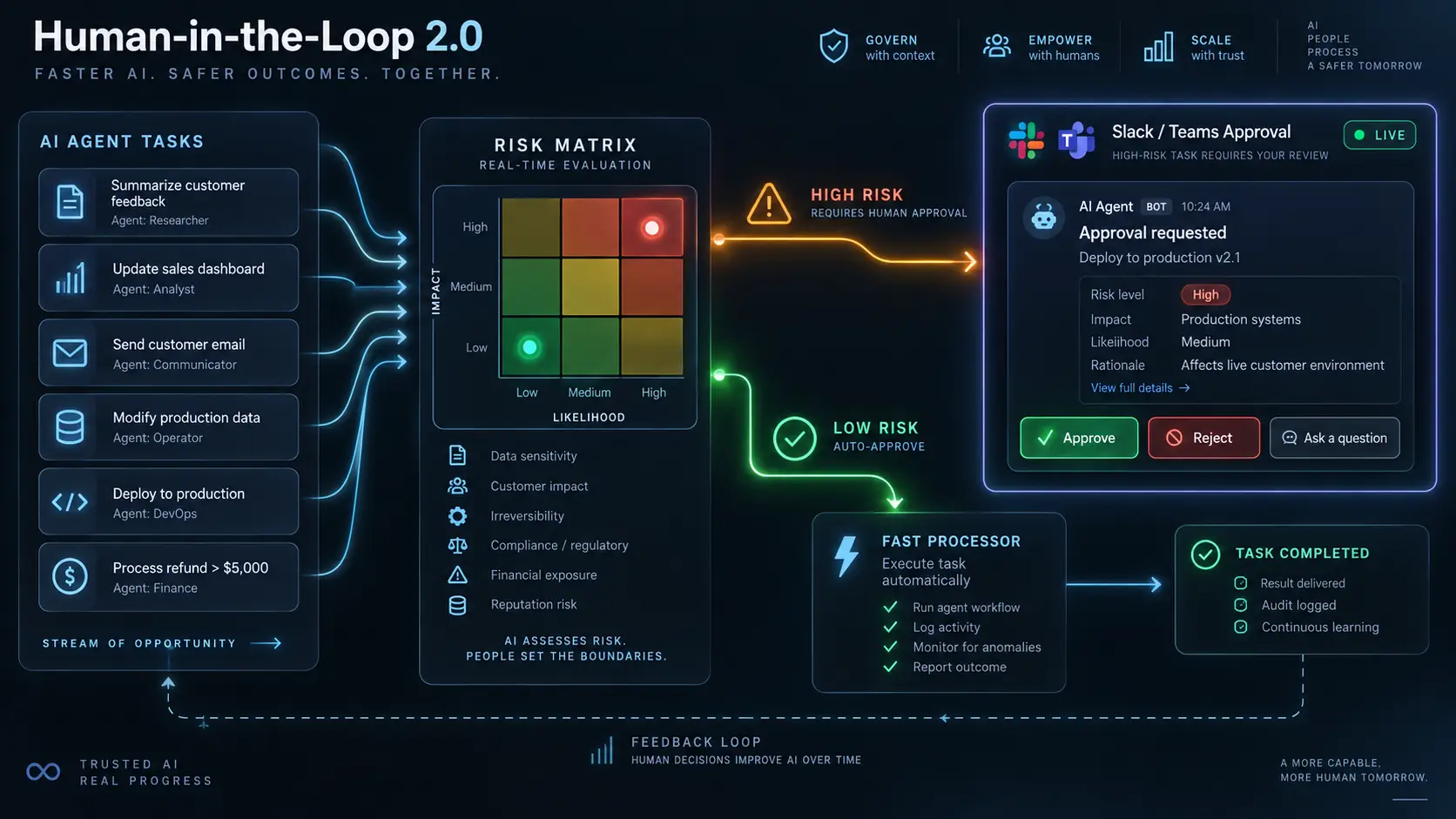
Human-in-the-Loop 2.0: Designing Escalation Triggers That Don't Bottleneck Agents
Requiring human approval for every agent action is not governance — it is a queue. Here is how risk scoring, confidence thresholds and async escalation keep agents fast and safe.

How GCs Are Cutting Outside Counsel Spend With AI in 2026
Corporate legal AI adoption doubled to 52% in 2026. Here's the GC playbook for cutting outside counsel spend, with vendor picks, ROI math, and pitfalls to avoid.