
The AI consulting market has exploded. Every management consultancy, software agency, and freelance developer now offers "AI transformation" services. Some of them are excellent. Many of them are not. And the difference between the two can cost your business hundreds of thousands of dollars and months of wasted effort.
This is not a problem unique to AI — the same dynamics have played out with cloud migration, digital transformation, and every other technology wave. But AI has a few characteristics that make the vendor selection problem especially tricky: the technology is genuinely new, outcomes are harder to predict, and most buyers do not yet have enough internal expertise to evaluate what they are being sold. If that is you, our guide to evaluating an AI vendor without a technical background covers the questions that surface a trustworthy answer.
This guide gives you a practical framework for choosing an AI consulting partner — the right questions to ask, the red flags to watch for, and the single most important factor most companies overlook.
The Right Questions to Ask
Before you evaluate proposals, you need to evaluate the people behind them. Here are the questions that separate serious AI consultants from the rest.
"Can You Show Me a Comparable Deployment?"
This is the single most revealing question you can ask. Not a demo. Not a proof of concept. A real system, running in production, at a company with similar constraints to yours.
If a consultant has built something comparable to what you need, they have already encountered the edge cases, integration challenges, and organizational friction that come with that type of project. If they have not, you are paying them to learn on your dime.
A good consultant will walk you through the specifics: what the system does, how long it took to build, what went wrong, and what the measurable impact was. A mediocre consultant will show you slides.
"What Is Your QA Process?"
AI systems behave differently from traditional software. They can fail in subtle, hard-to-detect ways — producing outputs that look correct but are not, degrading over time as input data shifts, or handling edge cases unpredictably.
Ask how the consultant tests their work. Specifically:
- How do they validate model outputs before deployment?
- How do they monitor performance after deployment?
- What is their process for catching and correcting errors?
- How do they handle data drift and model degradation?
If the answer is vague or focused entirely on accuracy metrics during development, that is a warning sign. Production AI systems need ongoing monitoring, and your consultant should have a clear plan for it.
"What Happens When Something Breaks?"
Every AI system will eventually produce an unexpected result or encounter an input it was not designed for. The question is not whether this will happen, but how your consultant handles it.
Ask about their incident response process. Who gets notified? How quickly can they diagnose and fix issues? Do they have fallback mechanisms in place — ways for the system to gracefully degrade or hand off to a human when it is uncertain?
A consultant who has never dealt with a production failure either has not deployed enough systems to encounter one, or is not being honest with you. Neither is a good sign.
"How Do You Define and Measure Success?"
This seems obvious, but it is remarkable how many AI engagements begin without clear, agreed-upon success metrics. A strong consultant will insist on defining these before work begins — not because they are bureaucratic, but because they know that ambiguous goals lead to ambiguous outcomes.
Good success metrics are:
- Specific: "Reduce average customer response time from 4 hours to under 30 minutes" rather than "improve customer service."
- Measurable: Tied to data you can actually collect and track.
- Timebound: With clear milestones and evaluation points.
- Business-oriented: Connected to outcomes your leadership cares about, not just technical performance.
If a consultant resists defining success criteria upfront, they are either not confident in their ability to deliver or they are building in ambiguity to avoid accountability.
"Who Actually Does the Work?"
This is especially important with larger consulting firms. The team that pitches you is often not the team that executes the project. Senior partners close the deal, then hand the work to junior associates or offshore teams.
There is nothing inherently wrong with junior talent or distributed teams — but you should know who is doing the work, what their experience level is, and how much access you will have to senior expertise when decisions need to be made.
Ask to meet the people who will actually build your solution. Ask about their backgrounds, their experience with similar projects, and how they handle technical decisions that have business implications.
Red Flags to Watch For
Some warning signs are obvious. Others are subtle. Here are the patterns that most often precede disappointing engagements.
They Lead with Technology, Not Business Problems
A consultant who starts the conversation by talking about large language models, neural networks, or their proprietary platform before asking detailed questions about your business is selling technology, not solutions.
Good AI consultants spend the first phase of any engagement understanding your operations, your pain points, your data landscape, and your organizational constraints. The technology choice comes after the problem is clearly defined — not before.
They Promise Specific Outcomes Before Understanding Your Data
"We can automate 80% of your customer service within six months." If you hear something like this in a first meeting — before any assessment of your data quality, systems architecture, or operational complexity — be very skeptical.
Honest consultants will tell you what is possible in general terms, but they will caveat any specific projections until they have done enough discovery to back them up with evidence.
They Cannot Explain Their Approach in Plain Language
If you cannot understand what a consultant is proposing after a 30-minute conversation, the problem is theirs, not yours. Technical complexity is not an excuse for unclear communication.
The best consultants can explain sophisticated AI systems in terms that a non-technical executive can follow — not because they are dumbing it down, but because they genuinely understand what they are building and why it matters for your business.
They Have No Framework for Handling Failure
Ask what happens if the pilot does not work. If the answer is silence, deflection, or "that won't happen," you are talking to someone who has either never failed or never acknowledged it. Both are concerning.
Experienced consultants have a framework for evaluating pilots, diagnosing what went wrong, and deciding whether to iterate, pivot, or stop. They will tell you about projects that did not work — and what they learned from them.
Their Pricing Is Opaque
You should be able to understand what you are paying for, how costs scale, and what is included versus billed separately. If a proposal is deliberately vague about pricing — or buries the real costs in footnotes — that is not a good sign.
Common pricing traps to watch for:
- Low initial engagement fees followed by expensive "Phase 2" charges
- Unclear boundaries between what is covered and what is an add-on
- Per-API-call pricing that scales unpredictably with usage
- Long-term contracts with minimal early termination options
Green Flags That Signal a Strong Partner
Not everything is about avoiding bad choices. Here are the positive indicators that suggest you have found a consultant worth working with.
They Ask More Questions Than They Answer
In early conversations, a good consultant spends most of the time asking about your business, your data, your team, and your goals. They are gathering the information they need to give you an honest assessment — not rushing to pitch a solution.
They Tell You What They Cannot Do
No consultant is good at everything. The ones who acknowledge their limitations and recommend alternative approaches (or even other providers) for areas outside their expertise are the ones you can trust.
They Propose Starting Small
Experienced consultants know that large-scale AI deployments rarely succeed without a proven pilot. If they recommend a focused, time-bound initial engagement with clear deliverables and evaluation criteria, they are thinking about your risk, not just their revenue.
They Have a Knowledge Transfer Plan
The most valuable thing a consultant can leave behind is not just a working system — it is the knowledge your team needs to maintain, evolve, and build on that system. Ask about documentation, training, and handoff procedures from the very first conversation.
They Share Referrals Without Hesitation
A consultant who readily connects you with past clients for candid conversations has nothing to hide. If they are reluctant to provide references, or only offer carefully curated case studies, ask yourself why.
The Most Important Question: Capability Versus Dependency
This is the question that separates a consulting engagement that transforms your business from one that creates an expensive ongoing dependency.
Is this consultant building our capability, or are they building their own indispensability?
The best AI consulting partners design engagements with a clear end state in mind. They are not just building systems — they are transferring knowledge, training your people, and creating documentation that allows your team to own and evolve the solution after the engagement ends.
The worst AI consulting partners — often unintentionally — design engagements that make you dependent on them. Proprietary tools that only they can maintain. Custom architectures that only they understand. Minimal documentation. No training. And a convenient retainer arrangement to "keep things running."
This does not mean you should never have an ongoing relationship with a consultant. Some businesses genuinely benefit from retained advisory support. But there is a fundamental difference between choosing to continue a relationship because it adds value and being forced to continue because you cannot operate without them.
When evaluating a potential partner, look at the structure of their proposal. Does it include:
- Documentation and knowledge transfer milestones?
- Training for your internal team?
- A clear handoff plan?
- Architecture decisions that avoid proprietary lock-in?
If the answer to most of these is no, you may be signing up for dependency rather than transformation.
How to Structure the Evaluation Process
Here is a practical sequence for evaluating AI consulting partners:
-
Define your problem first. Before talking to any consultant, write a clear description of the business problem you want to solve, the outcomes you expect, and the constraints you are working with (budget, timeline, data availability, internal resources).
-
Create a shortlist of 3–5 candidates. Look for consultants with demonstrated experience in your industry or problem domain. Referrals from trusted peers are more valuable than marketing materials.
-
Run structured conversations. Use the questions above as a framework. Compare answers across candidates — the differences in approach and transparency will become obvious quickly.
-
Check references. Talk to past clients directly. Ask what went well, what did not, and whether they would hire the same consultant again.
-
Start with a defined pilot. Do not commit to a large-scale engagement before validating the relationship with a smaller, time-bound project. A pilot should have clear deliverables, a fixed budget, and agreed-upon success criteria.
-
Evaluate the relationship, not just the output. After the pilot, assess not only what was delivered but how the engagement was managed. Communication quality, responsiveness, and transparency matter as much as technical performance.
What This Looks Like in Practice
A mid-market company recently came to us after a failed engagement with a different AI consultancy. They had spent six months and a significant budget on a customer service automation project that never made it to production. The previous consultant had built a complex system that required their ongoing involvement to operate — and when the relationship soured, the company was left with a system nobody on their team could maintain.
We started over with a different approach: a focused pilot scoped to a single high-volume customer service workflow, with clear success criteria defined upfront. We built using standard, well-documented tools rather than proprietary infrastructure. We trained their internal team throughout the process. And we documented everything.
The pilot ran for ten weeks. By the end of it, the company's own team was maintaining the system, response times had dropped by 65%, and they had a clear roadmap for expanding to additional workflows — with or without our continued involvement.
That is what a good consulting relationship looks like.
Next Steps
Choosing the right AI consulting partner is one of the highest-leverage decisions you will make in your AI journey. The right partner accelerates your capabilities. The wrong one burns budget, erodes internal trust in AI, and sets your timeline back by months.
If you are evaluating AI consulting options and want a candid, no-pressure conversation about your specific situation — what is realistic, what to prioritize, and whether we are the right fit — book a discovery call with our team. We will give you an honest assessment, even if the answer is that you do not need a consultant right now.
At Cynked, we build AI solutions designed to be owned by your team, not dependent on ours. Every engagement includes knowledge transfer, documentation, and a clear path to independence — because that is how lasting business value is created.
Need a scalable stack for your business?
Cynked designs cloud-first, modular architectures that grow with you.
Related Articles
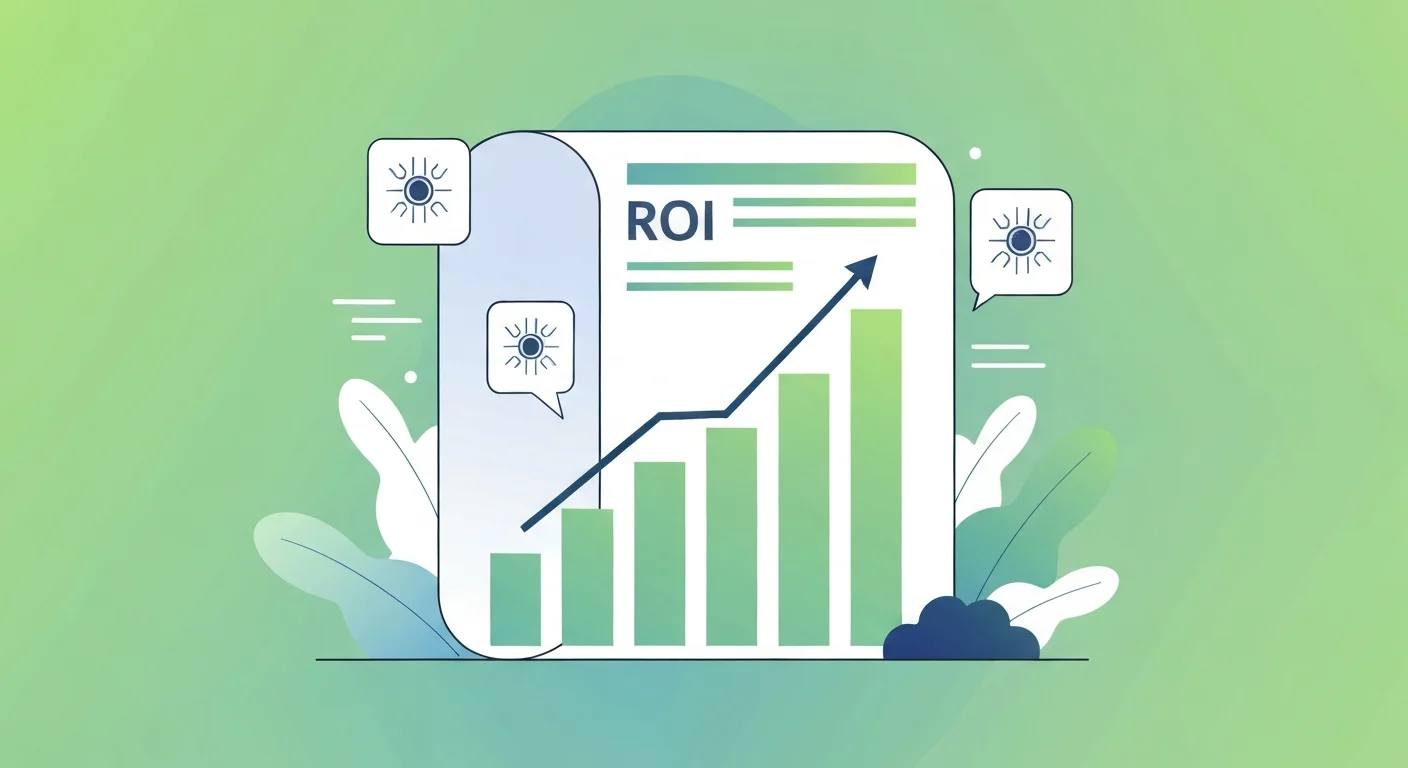
How to Write a Winning AI Business Case (Template + Checklist)
A step-by-step guide to writing an AI business case that gets approved. Includes a template, a financial model framework, and a checklist to stress-test your proposal.
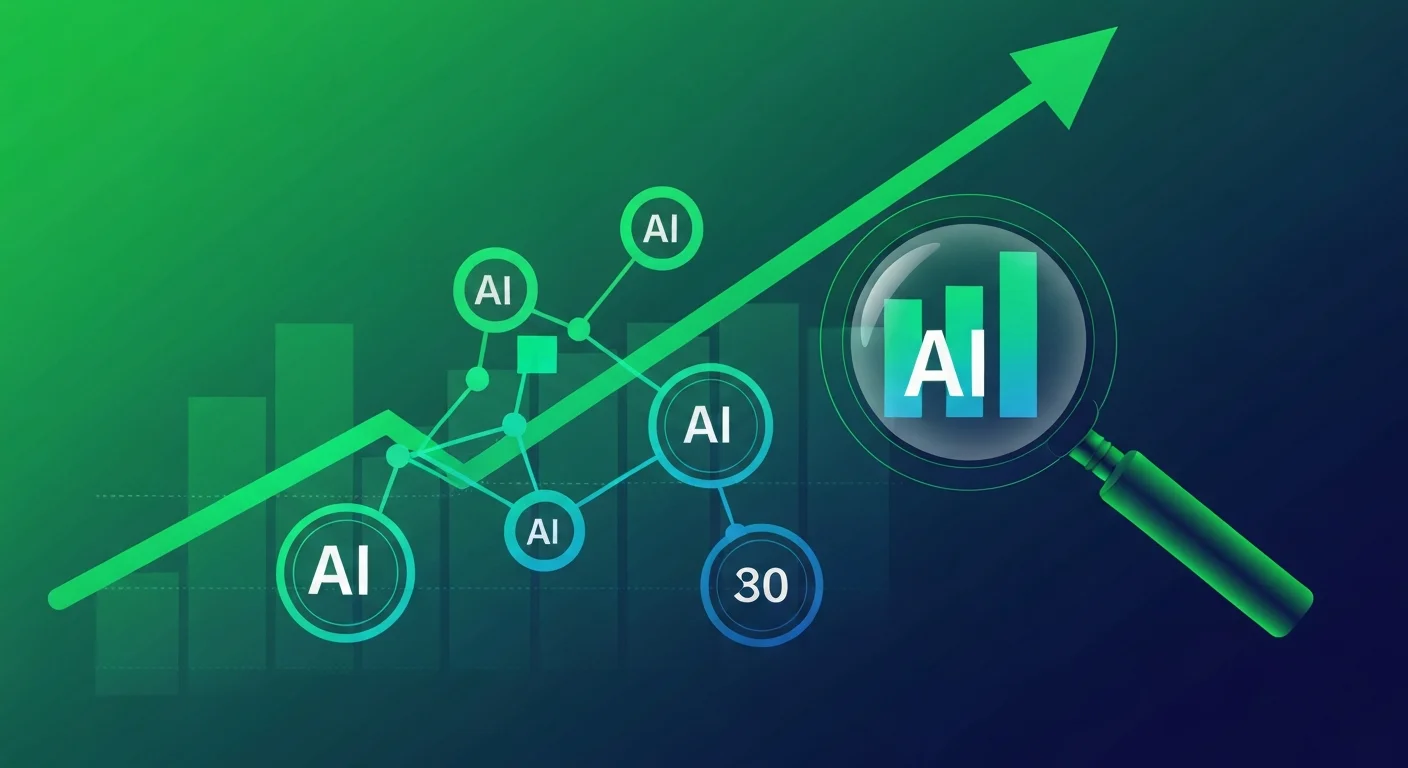
How to Measure the ROI of AI: The Metrics That Actually Matter
A practical guide to measuring the ROI of AI investments — the metrics that matter, how to baseline before you start, and how to report AI value to leadership.
AI Workflow Automation: 10 Processes You Can Automate This Quarter
Ten business processes you can automate with AI this quarter — from document processing to onboarding and reporting. With effort estimates and expected ROI for each.