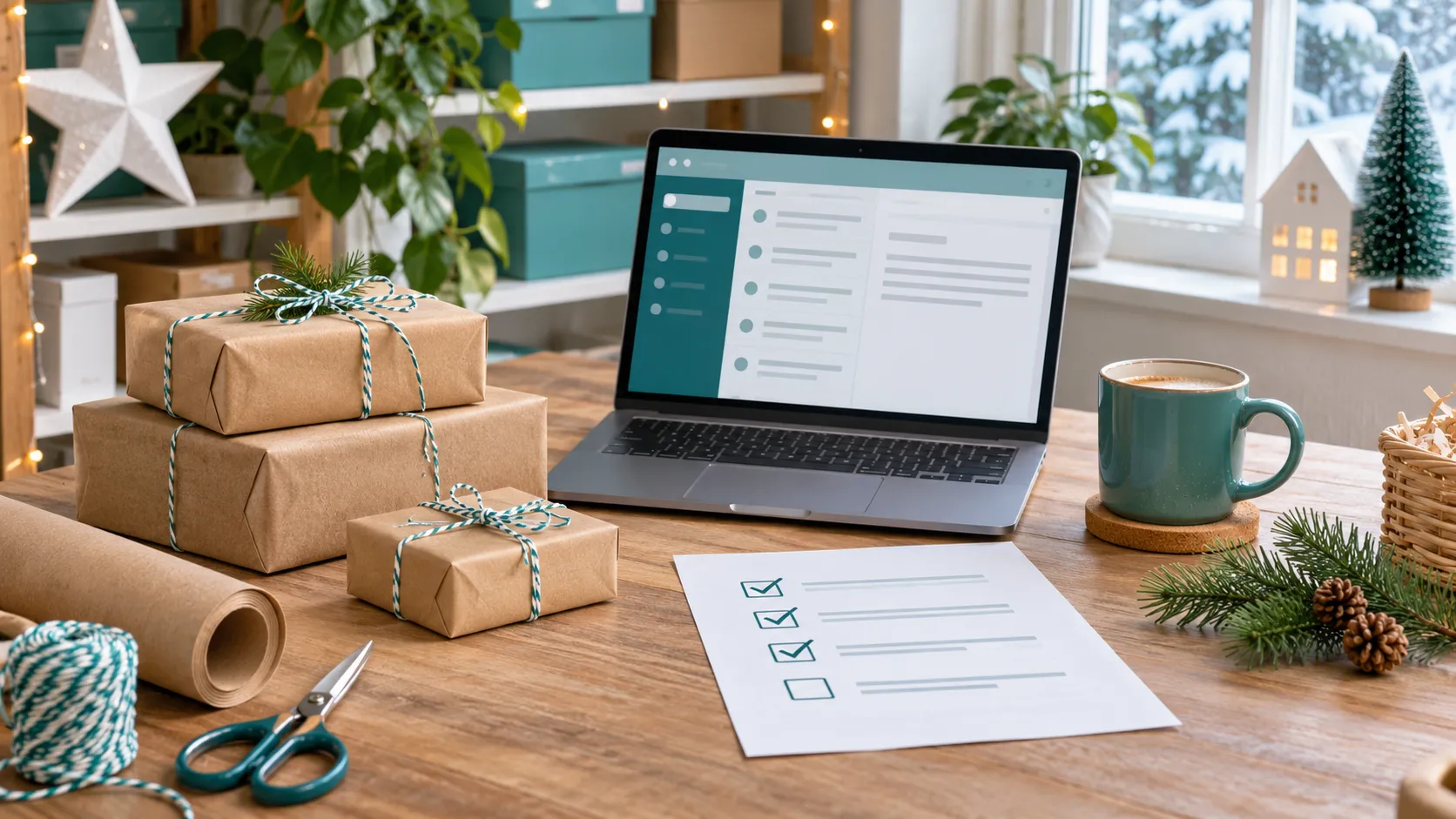
Between now and the middle of January, a small online shop doesn't get a hundred different questions. It gets about seven, a hundred times each.
Will it arrive by Christmas? Can my sister return it? Where's my parcel? Are you open on the 27th?
Each one takes two minutes to answer. Together they take your December. This post is about answering them once, properly, and letting AI do the retyping.
Why the questions don't stop on 25 December
The second wave is returns. In the 2025 Retail Returns Landscape report from the National Retail Federation and Happy Returns, retailers expected 17% of holiday sales to come back, and estimated that 19.3% of online sales would be returned over the year (NRF, 15 October 2025). Those figures come from large US merchants, so your shop's numbers will differ. The point that carries over: returns are part of the season, not an accident after it.
The same report found that 71% of shoppers say they're less likely to shop with a retailer again after a poor returns experience. For a small shop, a slow or confusing reply in January can cost the customer you won in November.
Step 1: write the answer sheet (one hour, once)
Open a document and answer these seven questions in your own words, with your real dates:
- Last order dates. For each shipping option, the last day to order for delivery before Christmas.
- Holiday returns. Your return window for orders placed in November and December, and when it ends.
- Gift returns. Can the person who received it return or exchange it? Do they need the order number? Do they get a refund or store credit?
- Where's my parcel. Where to find tracking, and how long to wait before contacting you.
- Closed days. Your holiday dates, and what happens to orders placed while you're away.
- Broken or wrong item. What the customer should send you (a photo, the order number) and what happens next.
- Changing an order. Whether an order can be changed or cancelled, and until when.
If you'd rather not start from a blank page, AI can turn your existing policy into a first draft:
Here is my shop's shipping and returns policy: [paste]. Turn it into short answers to these seven holiday questions: [paste the list]. Use only what my policy says. Where my policy doesn't answer a question, write [ASK ME] instead of making something up.
The [ASK ME] marks are your to-do list. Fill them in yourself. This sheet is the only source of truth for every reply that follows, so it has to be right.
Then put the same answers somewhere customers can see them: your shipping page, your returns page, or a short holiday FAQ. Every question a customer can answer themselves is one less email.
Step 2: let AI draft from the sheet
If you use Shopify Inbox: Shopify already does part of this. Its help centre says AI-generated suggested replies are switched on by default for stores that meet the requirements. A few things worth knowing before you rely on them:
- They only work in English (the store and admin must be in English too).
- They're drafted from your store information: products, shipping settings, store policies and pages. Shopify says your terms of service and privacy policy aren't used.
- They're a composing aid for staff. Shopify is clear that you're responsible for the accuracy of what you send, and should read and edit each reply first.
So the answer sheet from Step 1 does double duty here. Put its answers into your shipping and returns policies and a holiday page, and the suggested replies have the right facts to draw on.
If your questions arrive by email: keep the answer sheet open in a Claude or ChatGPT chat (a business plan whose data settings you've checked) and paste each question in:
Using only the answer sheet above, draft a reply to this customer message. Warm, short, under 100 words, in the tone of a small family shop. If the answer sheet doesn't cover their question, say so instead of answering. Customer message: [paste]
Keep card details, home addresses and phone numbers out of the chat. You rarely need them for the draft; you can add the order number by hand.
Step 3: a person presses send
Read every draft. It takes ten seconds, and it's the step that keeps a wrong date from reaching forty customers.
Three kinds of message should never get an AI draft at all. Write these yourself:
- Complaints, especially the angry ones. They want to hear from a person.
- Refund decisions outside your normal policy.
- Anything about a mistake you made. An apology written by you lands better than any template.
Step 4: update the sheet on 2 January
When the Christmas rush ends, the questions change: gift returns, exchanges, "the size was wrong". Spend twenty minutes on the first working day of January rewriting the sheet for returns season, with the exact date your holiday return window closes. Keep it until that date passes.
Then save the sheet. Next year's December starts from a document that only needs new dates.
The short version
- The holiday inbox is the same seven questions, many times over.
- Write your real answers once, on one sheet. Mark gaps [ASK ME], never guess.
- Put the answers on your site, so customers can help themselves.
- Let AI draft replies only from that sheet. Shopify Inbox users already have suggested replies switched on; read before sending.
- Complaints, refunds and apologies get a reply written by you.
- Update the sheet for returns season on 2 January.
For more of the jobs a small shop can hand to AI the rest of the year, see our post for small online shops.
Want this set up for your shop?
This is the kind of job we do in a Single Automation: we turn your policies into an answer sheet, connect it to the inbox or chat tool you already use, and test the drafts on your real (anonymised) customer messages before you rely on them. If you'd like to see where AI could give your shop time back first, start with a $149 AI Check-up, credited if you go further.
Not sure where AI would save your business time?
A 60-minute call and a one-page plan naming the 3 jobs in your business worth automating first. Taken off the price of any build booked within 30 days.
Related Articles

31 January, Then 7 February: A Bookkeeper's Countdown, With AI Doing the Chasing
Under Making Tax Digital for Income Tax, sole traders and landlords over £50,000 now owe HMRC a quarterly update on 7 February 2027, eight days after the 31 January tax return. Here's a week-by-week plan for a small bookkeeping practice, with AI drafting the reminders and sorting the paperwork, and people doing the numbers.

Google Meet May Already Be Taking Notes on Your Client Calls. Make It Worth It.
On Google Workspace Business Standard and Business Plus, AI note-taking for meetings of three or more is now switched on by default. Here's how a small consultancy or agency can check the setting, tell clients, and turn the notes into a follow-up email in five minutes.

A Week in a Small Online Shop, With AI Doing the First Draft
Monday numbers, the daily inbox, new-product day, the reorder and the monthly look at reviews: where AI can take the first pass in a small online shop, where the owner stays in charge, and a two-week way to try it.